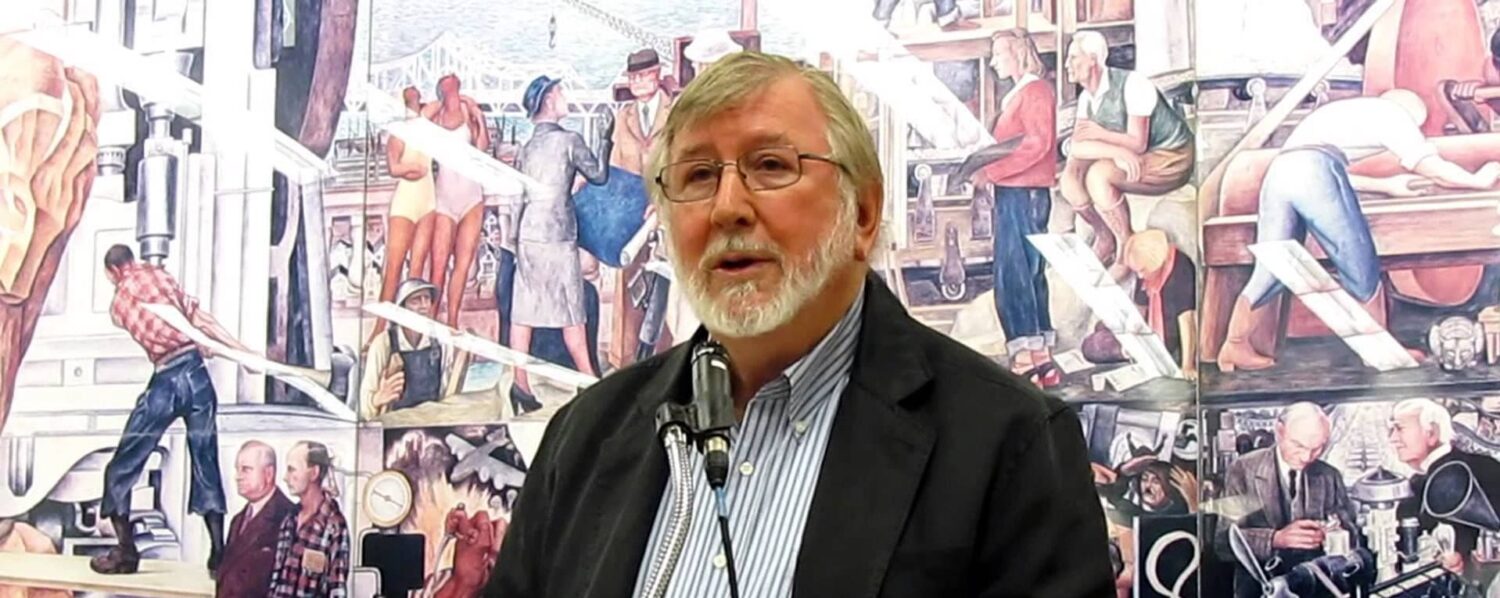

My autobiography is now available at Kindle (Amazon.com) and other online book providers.
Purchase a copy and Spread the word.
Copyrights @ Martin Hittelman 2026
The moral rights of the author have been asserted
All rights reserved
No part of this publication maybe reproduced, stored in a retrieval system or transmitted in any form or by any means, without the prior permission in writing of the publisher or the author, nor be otherwise circulated in any form of binding or cover other than that in which it is published and without a similar condition including this condition being imposed on the subsequent purchaser.
The Empire Publishers publishing
12808 West Airport Blvd Suite 270M Sugar Land, TX 77478
https://empirepublishers.co/about-us
Our books may be purchased in bulk for promotional, educational, or business use.
Please contact The Empire Publishers at +(844) 636-4576, or by email at support@theempirepublishers.com
ISBN Paperback: 979-8-90611-004-6
ISBN Hardback: 979-8-90611-005-3
First Edition 2026
A Progressive Political Chronicle
This autobiography frames eighty-six years of American political life. It is an exploration of the idea that working from within organizations is a way to effect change in institutions — unions, academic senates, colleges — without ever losing sight of radical goals. The book runs from the time of Joseph McCarthy to the current time of Donald Trump. This is the tale of a life dedicated to making a better world to live in.
Origins in the Red Scare
Born in 1940 in East Los Angeles to a family steeped in left-wing activism. Hittelman was a “red diaper baby ” That inheritance came from parents that were also “red diaper babies” who descended from immigrants from the Ukrainian region of Russia escaping Czarist pogroms and becoming Communist Party members or sympathizers. McCarthyism to his family was a family trauma with names, faces, and consequences: his Uncle Joe blacklisted as a doctor and family friends had careers destroyed.
Martin’s own initiation came early: as a fifth grader in Ontario, California, he was directed by his parents to refuse to participate in a racist minstrel show and discovering that you could take an unpopular stand without losing your friends.
Formation as an activist
Arriving at Berkeley in 1958 for the founding of the radical student political party (SLATE), he began to learn how to organize for progressive change. His political education at U.C. Berkeley was developed in meetings, protests, and rallies, including the May 1960 anti-HUAC (the House UnAmerican Activities Committee) demonstration at San Francisco City Hall, where police fire-hosed protesters down the marble steps, and the backfired propaganda film “Operation Abolition” ended up recruiting young people to attend the University of California. It was a time that HUAC’s authority began visibly to crumble.
The story continues thru the two years at Berkeley, recovering academically at Los Angeles City College, marrying, and starting a family, SDS activism at the University of Illinois, the founding convention of the California’s Peace and Freedom Party, communal living at “The Collective Unconscious” in Santa Monica, moving back to Echo Park and the Food Conspiracy, and joining the California community college system.
Union and education years
Hittelman created the L.A. Harbor Folk Festivals (1976–1980), bringing performers like Utah Phillips, Rosalie Sorrels, and a pre-fame Los Lobos to campus free of charge and using folk music as both community-building and an expression of working-class cultural memory.
The autobiography traces Martin’s rising participation in the California Federation of Teachers, eventually to its presidency, fighting for part-time faculty equity (“working conditions are student learning conditions”), defending City College of San Francisco from a politically weaponized accreditation process, and meeting figures like Jerry Brown, Dolores Huerta, and Secretary of Labor Hilda Solis along the way.
The 2010 March for California’s Future — forty-eight days on the road, ending with seven thousand people in the Sacramento rain — was Martin’s proudest achievement: the passage of Proposition 25, which replaced California’s two-thirds legislative supermajority requirement for passing a budget with a simple majority. This was just one example of how sustained, disciplined organizing can produce structural, not just incremental, change.
The long political argument
Drawing on George Lakoff’s formulation that “the private depends on the public,” public education, roads, libraries, Social Security, and Medicare are the collective infrastructure that makes private enterprise and personal freedom possible at all. The autobiography traces a rightward drift across decades — Reagan’s attacks on unions, Citizens United’s flood of anonymous money into politics, media structurally biased toward capital over labor — culminating in Trump’s capture of the Supreme Court and the Republican Party as a vehicle for oligarchic interests and white racial resentment.
Hittelman lived through McCarthyism, the 1960s, Reagan, Clinton-era compromise, the Bush wars, Obama’s caution, and now Trump, and in each period the same underlying questions recur: who benefits from growth, who holds power, and what education is for.
McCarthy to Trump
The Life of an Inside Agitator exposes the Trump Regime’s anti-democratic rule involving: mass ICE raids conducted as terror campaigns against immigrant communities; Elon Musk’s unaccountable private power fused with the machinery of federal government; cabinet appointments reflecting loyalty over competence; legally dubious tariff policy; the erosion of honest history curricula and civil liberties; and a Republican Congress that became a vehicle for Trump’s personal power rather than a check on it.
Trump is exposed as a demagogue exploiting fear, demanding loyalty over competence, using government machinery to punish enemies, sustained by a coalition of true believers and opportunists — with a media environment failing to adequately cover the corruption. Robert Reich’s image of the “sleeping giant” that roared against McCarthy, then Jim Crow, then the Vietnam War, then Nixon is used to provide hope that the American people will eventually unite to turn in a more progressive direction. The autobiography closes not in despair but in what Hittelman calls “grounds for modest optimism.”
Running alongside the political narrative is a fuller personal record including his partnership with Sandra Lepore; a lifelong sense of humor traced from his grandmother through Tom Lehrer, Woody Allen, Mort Sahl, and Kurt Vonnegut; international labor solidarity travel to China and Vietnam; and his athletic career. The autobiography is not just pure polemic — it’s a full life, with humor and family at its center, that happens to have been lived at close range to nearly every major progressive struggle of the last eighty-five years.